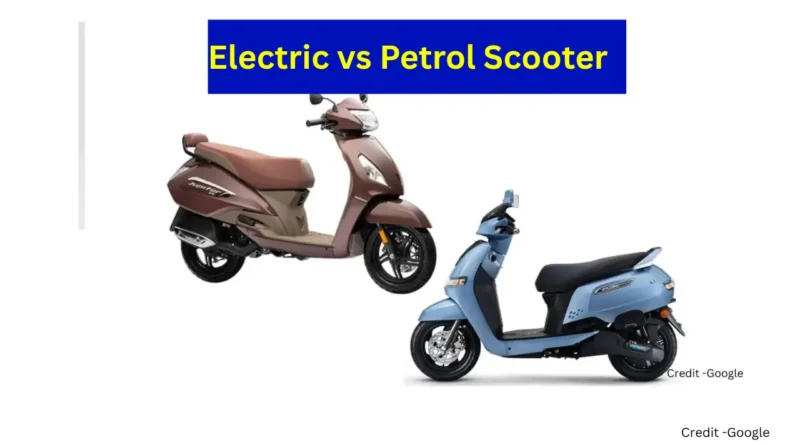
Electric vs Petrol Scooter: Which Is Better for You?
Thinking about buying a scooter but confused between electric and petrol? The right choice depends on your budget, daily travel, performance needs, and long-term costs.
Let’s compare them in simple terms.
Electric vs Petrol: The Basic Difference
A petrol scooter uses fuel to run, while an electric scooter uses a rechargeable battery.
Petrol scooters have been around for decades and are easy to refuel. Electric scooters are newer, quieter, and usually cheaper to run.
So, which one is better? Let’s find out.
Performance
Petrol Scooters
Petrol scooters provide smooth and familiar performance. They are especially useful if you regularly travel long distances because you can refuel in just a few minutes.
Electric Scooters
Electric scooters provide instant power when you twist the throttle. This makes them quick and easy to ride in busy city traffic.
They are also much quieter because there is no traditional engine.
In short:
- Petrol: Good for long rides and quick refuelling.
- Electric: Great acceleration and a smooth, quiet city ride.
Range and Charging
Range is one of the biggest concerns with electric scooters.
A petrol scooter can usually travel much farther on a full tank, and petrol stations are widely available. Electric scooters have a limited range, but many modern models can easily handle a normal daily commute.
You can also charge an electric scooter at home, usually overnight.
| Feature | Petrol Scooter | Electric Scooter |
|---|---|---|
| Refuelling/Charging | 5–10 minutes | Several hours |
| Typical Range | Higher | Lower |
| Daily Use | Very flexible | Best for regular city travel |
| Home Convenience | No | Yes, overnight charging |
If you mainly travel around your city, an electric scooter’s range may be more than enough.
Which Is Cheaper?
This is where electric scooters have a major advantage.
Electric scooters generally cost more to buy, but they are cheaper to run.
For example, imagine:
- Petrol scooter: 50 km per litre
- Petrol price: ₹100 per litre
- Petrol cost: about ₹2 per km
Now consider an electric scooter:
- Electricity cost: ₹8 per unit
- Consumption: about 3 units for 75 km
- Electricity cost: about ₹0.32 per km
For someone travelling 20 km every day, the yearly energy cost could be roughly:
- Petrol: ₹14,600
- Electric: ₹2,336
That’s a difference of more than ₹12,000 a year, based on these example prices.
Actual savings will depend on your scooter, electricity rate, petrol price, and how much you ride.
Maintenance Costs
Electric scooters are also simpler to maintain.
An electric scooter doesn’t need:
- Engine oil changes
- Spark plug replacements
- Engine air/oil filter servicing
- Clutch maintenance
- Many of the other services required by petrol engines
You still need to take care of things such as tyres, brakes, suspension, and other normal components.
Petrol scooters have more mechanical parts, so regular servicing can cost more over time.
Winner for maintenance: Electric
What About the Battery?
The battery is probably the biggest concern when buying an electric scooter.
Replacing a battery can be expensive. However, modern batteries are designed to last for years, and manufacturers generally provide battery warranties.
Before buying an electric scooter, check:
- Battery warranty
- Battery replacement price
- Expected battery life
- Charging time
- Availability of replacement batteries
Don’t look only at the scooter’s purchase price. Consider the total cost over several years.
Environmental Impact
Petrol scooters produce exhaust emissions while running.
Electric scooters have zero tailpipe emissions, meaning they don’t release exhaust fumes while you ride.
However, electric scooters aren’t completely impact-free. Producing batteries requires raw materials and energy, and batteries eventually need to be recycled or replaced.
Even so, electric scooters can offer a cleaner option, especially when the electricity used for charging comes from cleaner energy sources.
Everyday Convenience
Petrol
Petrol scooters are convenient if you:
- Travel long distances
- Frequently go on trips
- Don’t have access to home charging
- Want quick refuelling
Electric
Electric scooters are convenient if you:
- Mainly travel within the city
- Have a place to charge at home
- Want lower running costs
- Prefer a quiet ride
- Want less routine maintenance
For many daily commuters, charging at home is all they need.
Common Electric Scooter Myths
“Electric scooters are slow.”
Not necessarily. Many electric scooters offer quick acceleration because electric motors provide instant torque.
“The battery will stop working after one year.”
Usually not. Modern batteries are designed to last for years, although their capacity gradually decreases over time.
“There is nowhere to charge an electric scooter.”
For most daily riders, home charging can solve this problem. Public charging becomes more important when you travel longer distances.
So, Which Scooter Should You Buy?
There is no single answer for everyone.
Choose a petrol scooter if:
- You regularly travel long distances.
- You need very quick refuelling.
- You don’t have convenient access to charging.
- You often take longer trips.
Choose an electric scooter if:
- Most of your travel is within the city.
- You can charge at home.
- You want lower running and maintenance costs.
- You prefer a quiet, smooth ride.
- You want to reduce your vehicle’s tailpipe emissions.
The Final Verdict
If your daily travel is mostly short city trips and you have a convenient place to charge, an electric scooter can be a smart long-term choice.
If you frequently travel long distances or need the flexibility of quick refuelling, a petrol scooter may still suit you better.
The best scooter isn’t necessarily the one with the biggest battery or the highest mileage. It’s the one that fits your daily routine, budget, and travel needs.
Conclusion
The debate between electric vs petrol scooters is complex, touching on finances, convenience, and our values. There’s no single “right” answer for everyone. The petrol scooter remains a dependable workhorse, especially for those who need to cover long distances without a planned charging stop. But for the vast majority of urban commuters—those fed up with rising fuel prices, constant maintenance, and city pollution—the benefits of an electric scooter are simply too compelling to ignore.
It’s a journey of quiet confidence, significant savings, and a clear conscience. It’s the moment when you look back at the expense and noise of the past and glide forward into a future that’s cleaner, simpler, and more efficient.